
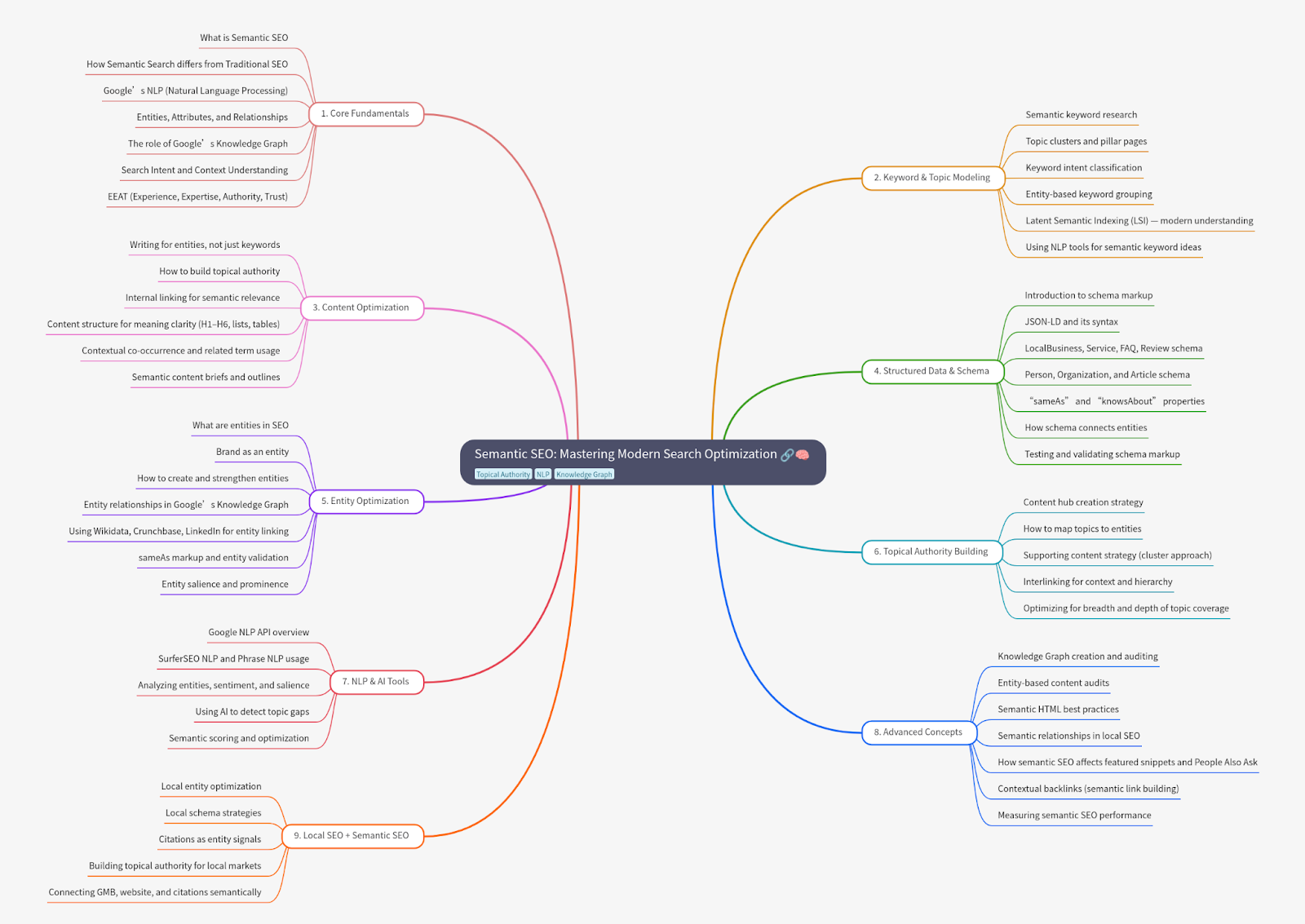
This case demonstrates how a traditional WordPress SEO plugin was transformed into an AI-driven search optimization engine—designed for modern indexing, semantic search, and LLM-based discovery.
The initiative targeted time savings, consistency, and future-proof SEO, enabling content teams and enterprises managing large WordPress and WooCommerce installations to scale optimization efforts without manual intervention.
Business Challenge
Search engine optimization had shifted significantly due to:
- E-E-A-T requirements and semantic ranking signals
- AI-driven indexing and LLM-based content discovery
- Rapid algorithm changes invalidating static rule-based SEO logic
Legacy plugins relied on fixed heuristics and manual metadata input, creating several constraints:
- Manual metadata creation for hundreds or thousands of pages
- High error rates and inconsistent quality
- Poor schema coverage and invalid markup
- Slow indexing for large content and product catalogs
- Inability to adapt to evolving search behavior
For content-heavy and commerce-driven websites, SEO had become both a bottleneck and a hidden operational cost.
Solution Architecture
We redesigned the plugin as an AI-first SEO automation platform, shifting from static rules to contextual understanding and real-time generation.
The system continuously analyzes WordPress content—posts, pages, and products—to extract semantic meaning and automatically generate search-optimized structures.
Core automation capabilities:
- Real-time generation of titles and meta descriptions
- Semantic analysis of page content and intent
- Automatic creation of valid JSON-LD and Schema.org markup
- Continuous technical and content validation via automated test flows
- Editor preview and approval workflows for governance
- Flexible usage models (API keys or credit-based consumption)
Automation orchestration and validation pipelines were implemented using n8n, while large-scale rule testing and rendering checks were powered by Puppeteer.
The AI layer leveraged OpenAI and Anthropic to ensure high-quality semantic interpretation and metadata generation.
Enterprise-Grade Capabilities
- AI-native SEO logic aligned with semantic and LLM indexing
- Automated schema generation for content and WooCommerce products
- Continuous validation pipelines replacing manual QA
- Editor-friendly controls with enterprise governance
- Cloud-ready architecture for high-traffic websites
The system was delivered over 11 weeks by a cross-functional team and engineered to support both SMB and enterprise WordPress deployments.
Business Impact & ROI
- SEO metadata generation reduced from hours to seconds
- Elimination of manual errors and inconsistent tagging
- Faster indexing and improved SERP visibility
- Significant time savings for content and marketing teams
- Improved SEO scalability without increasing headcount
From an ROI perspective, the plugin converts SEO from an ongoing manual expense into a self-optimizing automation layer, freeing teams to focus on strategy and content quality.
Scalability & Strategic Extensions
The architecture enables long-term evolution:
- Predictive SEO recommendations
- AI-driven internal linking strategies
- Search intent clustering across large content libraries
- Deeper integration with analytics and conversion data
- Expansion to additional CMS platforms
This positions the plugin not merely as a WordPress add-on, but as a strategic SEO automation platform aligned with the future of search.
Technology Stack (Representative)
- AI Models: OpenAI GPT, Anthropic Claude
- CMS Integration: WordPress, Gutenberg, WooCommerce
- Automation & Orchestration: n8n
- Testing & Validation: Puppeteer
- Backend Services: Node.js
- Metadata & Schema: JSON-LD, Schema.org
- Infrastructure: AWS Lambda, Cloudflare CDN
- Security: OAuth 2.0, encrypted API access
Result:
A legacy SEO plugin was transformed into an intelligent, AI-powered optimization engine—delivering faster indexing, higher metadata quality, and massive time savings while future-proofing WordPress sites for the next generation of search.